Today I am writing about a Congress Leader who became Prime Minister, headed a minority govt but completed full term of five years. He was also Congress Party President for 4 years. He was instrumental in keeping Congressmen together after demise of Rajiv Gandhi, but he was treated so shabbily after he demitted the office of PM, by the same Gandhi family members. Even after his death in Dec 2004, when UPA 1 was in power, his family members were not allowed to bring his body to Congress Party Headquarter. By now you all must have guessed the identity of the Congressmen, and he is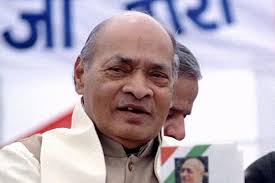
PV NARSIMHA RAO
He had almost retired from politics, when during the Election phase Rajiv Gandhi, Congress President and PM designate was assassinated in May 1991. As there was initially no concesus Congressmen who could become Party President & PM, the choice was narrowed down to PV Narsimha Rao ,who accepted this responsibility. He took charge at the most troubled times, as preceeding two govts of Deve Gowda & IK Gujral has left economy in shambles with external debt at its peak and foreign reserves at the rock bottom. As over the years Indian economy was tied up with socialistic policies of USSR, but by 1991 USSR has totally crumbled with each state forming their own union & country. There was no way the Indian economy could stand of its own with the existing policies. A drastic action was needed to revive the economy. Narsimha Rao took the most bold step by appointing Economist Dr Manmohan Singh as Finance Minister.
Major reforms in Capital Markets led to an influx of foreign portfolio investment. The major Economic Reforms/change in Economic Policies which were adapted by Rao regime were as follows:
a.Introducing the SEBI Act of 1992 and the Security Laws( Ammedment), which gave SEBI the ultimate legal authority and powers to Register & Regulate all Security Market intermediaries.
b.Abolishing in 1992 the Controller of Capital issues, which decided the prices and number of shares the company could issue in the market.
c. In 1992 Govt open up India’s Equity Market to investment by foreign institutional investors and permitting Indian Firms to raise Capital in International Markets bu issuing Global Depositor Receipts(GDRs)
d.Reducing tarrifs from an average of 85% to 25 % and rolling back quantitative controls. The Rupee was made convertible on trade account.
e.National Stock Exchange (NSE) was started in 1994, it was totally a computer based trading system which served as a instrument and leverage for reforms of other stock exchanges. By 1996 NSE became India’s largest exchange.
f.Stream lined procedures for Foreign Direct Investment(FDI) approvals. Atleast in 35 industries it was automatic approval system, with foreign equity participation.
g. Encouraging FDI by increasing the maximum limit on share of capital in joint venture from 40 to 51%, with 100% Equity permitted in priority Sectors.
Under Rao’s leadership, the national Security & Ballistic Missile program was put on fast track, which ultimately resulted in 1998 Pokhran Nuclear Test. Actually it was known to few selected people that India was ready for test in 1995, which became known to USA and test was dropped under American pressure. He also inceased the military spending and set the Indian army on course to fight the emerging threat of insurgencies and terrorism. It was during Rao’s term that terrorism in Punjab was put to an end. He also handled the Hazrat Bal Shrine seize by Terrorist, who were successfully defeated and occupation was put to an end without damage to Shrine Structure.
In dealing with Kashmir insurgency, Rao, to certan extent, was restrained by American President Bill Clinton. But he went ahead in controlled manner to deal with it. Rao’s govt introduced Terrorist and Disruptiv Activities(Prevention) Act (TADA), which was India’s first anti terrorist legislation. This was effectively used by Army to control infiltrators. Despite a largely successful Army campaign, the state descended into a security nightmare. Tourism and commerce were largely disrupted. Special police units were often accused of committing atrocities against the local population, Rape, kidnapping, torture and detention under false accusations.
The demolition of Babri Masjid , also happened during Rao’s regime. Not going into details of that episode.
In July 1993 Rao Govt faced no confidence motion in the Parliament, as the opposition felt that Govt do not have majority. It was alleged that Narasimha Rao, through a intermeditory offered crores of Rupees to members of Jharkhand Mukti Morcha(JMM) and Janata Dal(JD) break away group, to vote in favour of Govt during no confidence motion. Shailendra Mohato , a MP from JMM who had accepted bribe, agreed to turn approver in 1996. After Rao’s Govt tenure ended, the case’s investigation began earnestly. In 2000 both Rao and his associate Buta Singh were sentenced to 3 years in Jail and fine of Rs 100,000 each. Rao & Buta singh appealed in Delhi High Court which over turned the lower courts order in 2000, on the basis of inconsistency in Mohato’s statements.
One thing is certain that it was Rao’s Govt that laid the path for the liberlisation of the Indian Economy and which was continued by by subsequent Govts.
So what you say my friends.
Waiting for your views/feed back/comments.
Anil Malik
Mumbai, India
27th Nov, 2018
R. N. Mungale.
Narsinharao will always be remembered for liberalising Indian Economy.